

How to Repair Your Skin Barrier: 6 Korean Labels Checked
Disclosure: retailer links in this article may be affiliate links. If you buy through one we may earn a small commission at no extra cost to you.
Repairing a damaged skin barrier mostly comes down to doing less to it: shorter, warmer (not hot) washes, a gentle cleanser, a cream applied right after you pat dry, and no fragrance while it settles. The part most guides skip is the cream itself.
Lab work on mouse skin in the 1990s found that applying one or two of the three barrier lipids (ceramides, cholesterol and free fatty acids) slowed barrier recovery, while a mix of all three did not.
So we read six Korean barrier creams’ ingredient lists to see which of those three lipids each one actually names, and where.
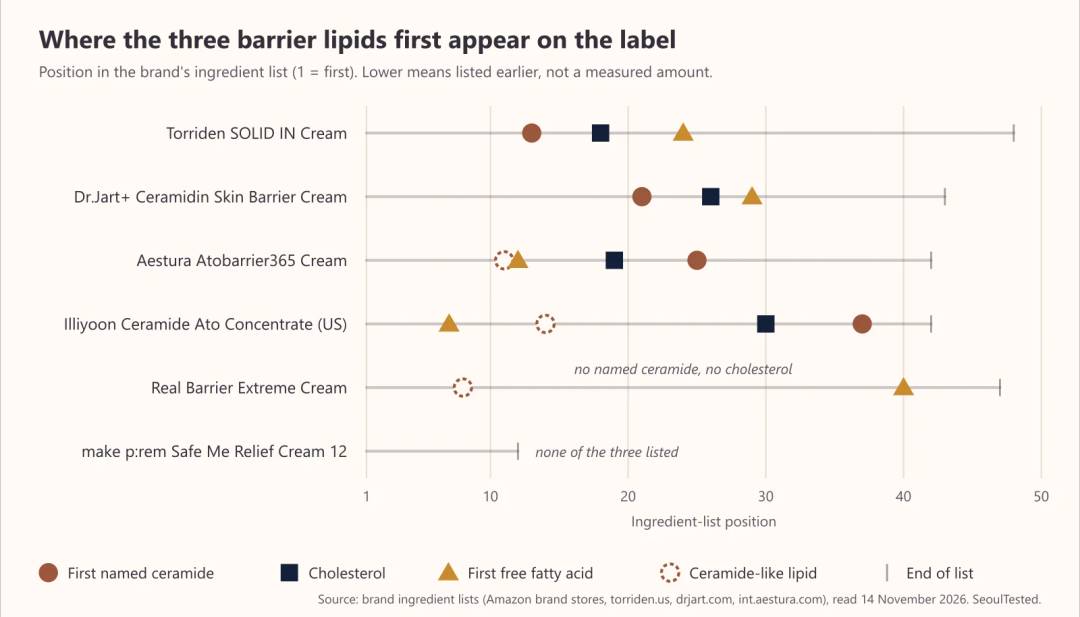
Four of the six list all three. One lists none of them, and one swaps in look-alike lipids with no named ceramide or cholesterol. Our Korean moisturizer ranking picks creams on texture, value and editorial consensus, and the sensitive-skin label check looks at fragrance and short ingredient lists.
This page asks a narrower question neither of them answers: does the label carry the full lipid set the research points to?
The repair routine, one step at a time
None of these steps needs a new product except the cream in step 4. The American Academy of Dermatology (AAD) advice below is written for dry skin, which is what most people mean when they search for a damaged barrier: tight, flaky, stinging skin.
- Cut the stripping. The AAD says to “limit baths and showers to five to ten minutes, using warm water” and to wash with a gentle cleanser. Our Korean face wash comparison lists low-foam options if your current one leaves skin squeaky.
- Moisturize within minutes. The same AAD page says to pat skin dry and “immediately apply your fragrance-free moisturizer.”
- Choose a cream, not a lotion. AAD dermatologists write that “ointments and creams add more moisture to skin and are more effective than lotions.”
- Read the label for all three barrier lipids. Ceramide, cholesterol and a free fatty acid such as stearic or palmitic acid. The table further down shows which Korean creams name all three.
- Skip fragrance for now. The AAD says dermatologists recommend products labeled “fragrance-free”. On a Korean label that means looking past the front of the pack for essential oils, which three of our six creams contain.
- Seal it at night if you are still flaking. Petrolatum is on the AAD’s list of moisturizing ingredients to look for. A thin layer over your cream is the usual way to use it.
- Give it weeks, not days. A Cleveland Clinic article written with dermatologist Melissa Piliang is more cautious: it “typically takes three or four months to start seeing the benefits” of barrier care.
If your routine includes exfoliating acids or retinoids, most pages ranking for this search tell you to pause them. Neither AAD page we read covers that, so treat it as common advice rather than an official rule, and ask your prescriber before stopping anything prescribed.
If skin is cracked, bleeding or not improving, that is a dermatologist visit, not a cream question.
What the lipid research found, and its limits
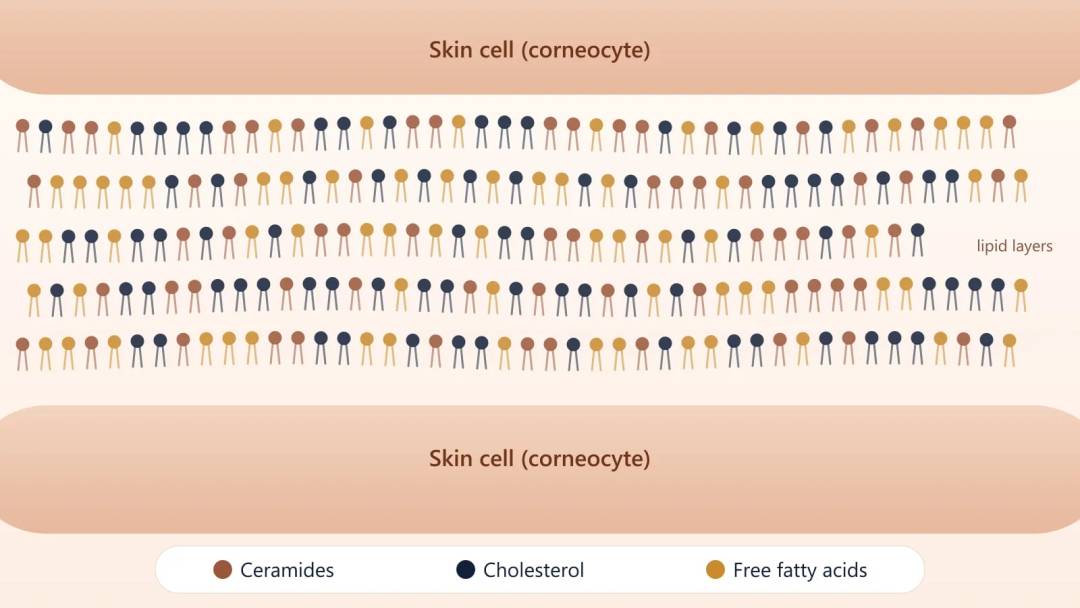
The outer layer of skin is often compared to bricks and mortar: flattened cells held together by a lipid “mortar”. Researchers Jeroen van Smeden and Joke Bouwstra describe that mortar as “dominated by three lipid classes: cholesterol, free fatty acids and ceramides”, packed into ordered layers.
The repair claims trace back to a group at the University of California, San Francisco. In 1993, Man, Feingold and Elias stripped the barrier of hairless mice with acetone and applied lipids alone or in mixes.
Their abstract reports that ceramide or fatty acid alone, and every two-lipid mix, “delayed barrier recovery”, while complete mixes of all three allowed normal recovery.
A 1996 follow-up in the Journal of Investigative Dermatology found that an equimolar (1:1:1) mix allowed normal repair, and that “further acceleration of barrier repair occurs as the ratio of any of these ingredients is increased up to 3-fold.” That is where the “3:1:1” shorthand comes from.
The fatty acids that worked included linoleic, palmitic and stearic acid.
The work has limits. The experiments were in mouse skin, with only “similar preliminary results” reported in damaged human skin, and they measured water loss after a lab injury rather than everyday dryness.
Peter Elias, the senior author, discloses in a 2011 review that he is a co-inventor of the optimal ratio, triple-lipid therapy and a consultant to the companies that market the prescription cream EpiCeram. None of that makes the work wrong.
It does mean “all three lipids together” is a reasonable thing to look for, not a promise that a cream with all three will fix your skin faster.
Six Korean barrier creams, read for the three lipids
For each cream we took the ingredient list from the brand itself or its official Amazon store on 14 November 2026, then recorded the position of the first named ceramide, cholesterol and the first free fatty acid.
We also noted “ceramide-like” lipids (synthetic pseudo-ceramides such as hydroxypropyl bispalmitamide MEA), plant sterols, essential oils and the price per milliliter at the linked seller.
| Cream | Ceramide (first named) | Cholesterol | Free fatty acid | Main emollient or occlusive | Scent ingredients | Regular price, cost per ml |
|---|---|---|---|---|---|---|
| Torriden SOLID IN Cream (70 ml) | NP 13th, then NS, AS, EOP, AP to 17th | 18th | Stearic 24th | Jojoba oil 4th | None listed | $31, 44 cents |
| Dr.Jart+ Ceramidin Skin Barrier Moisturizing Cream (50 ml) | NP 21st, then NG, NS, AS, AP to 25th | 26th | Palmitic 29th, stearic 30th | Caprylic/capric triglyceride 3rd, shea butter 9th | Geranium, bergamot and sage oils, citronellol | $52, $1.04 |
| Aestura Atobarrier365 Cream (80 ml) | NP 25th (ceramide-like lipid 11th) | 19th | Stearic 12th, palmitic 16th | Squalane 6th, dimethicone 10th | None listed | $32, 40 cents |
| Illiyoon Ceramide Ato Concentrate Cream, US tube (200 ml) | NP 37th, stated as 4 ppm (ceramide-like lipid 14th) | 30th | Stearic 7th, palmitic 9th | Dimethicone 4th | None listed | $25, 12.5 cents |
| Real Barrier Extreme Cream (50 ml) | None named (ceramide-like lipid 8th) | None (plant sterols 23rd) | Stearic 40th | Caprylic/capric triglyceride 3rd | Sage, patchouli, cardamom, mint, chamomile and juniper oils | $31.92, 64 cents |
| make p:rem Safe Me. Relief Moisture Cream 12 (80 ml) | None | None | None | Squalane 3rd | Bergamot and sage oils | $29.99, 37 cents |
Prices are each seller’s regular price, stock checked 14 November 2026; all six were in stock. Where a seller had a sale that day, the cream’s own section gives the sale price.
Torriden is the only cream that names a true ceramide before 20th place. The two Amorepacific creams, Aestura and Illiyoon, put fatty acids near the top and true ceramide much lower, leaning on a synthetic ceramide-like lipid instead.
And the “barrier” or “relief” wording on the front of a pack told us nothing: Real Barrier names no ceramide or cholesterol at all.
Why no label can show you a 3:1:1 ratio
US labeling rules list ingredients by amount only down to 1 percent. In the FDA’s own wording, “ingredients present at a concentration not exceeding 1% may be listed in any order.” Below that line, position stops meaning amount.
Illiyoon’s US label lets you see where that line falls, because it prints amounts next to two ingredients. Its ceramide-like lipid at 14th is stated as 7,622 ppm, which is about 0.76 percent.
That puts everything from 14th onward under 1 percent, so its cholesterol (30th) and ceramide NP (37th, at 4 ppm, or 0.0004 percent) could legally sit in any order.
In every cream here, cholesterol and the true ceramides sit at 13th place or later, so the same caution likely applies: you can confirm all three lipids are present, but not their ratio.
The practical rule: use the label to rule creams in or out (all three present, no added scent), then judge the rest on texture and how your skin reacts.
The six creams, label first
These are not ranked. Each note covers what the list shows, then what buyers report, complaints included.
Torriden SOLID IN Cream: five ceramides before 20th place
Torriden’s US store lists ceramides NP, NS, AS, EOP and AP from 13th to 17th, cholesterol 18th and stearic acid 24th, after glycerin, jojoba oil and panthenol. No fragrance or essential oil appears.
Amazon’s listing advertises “20,000 ppm of Natural Ceramide”; that is 2 percent, and the label alone cannot show whether it counts pure ceramide or a supplier blend. It is $31 for 70 ml at Torriden’s Amazon store.
The Amazon listing shows 4.5 stars from 218 ratings. An r/AsianBeauty commenter enjoys it “as a less scented ceramide cream” for dry skin but warns it “might be a bit much for daytime for oily skin types.” Another in the same thread found it too heavy for their pores.
Dr.Jart+ Ceramidin Skin Barrier Moisturizing Cream: all three lipids, plus essential oils
The drjart.com list names five ceramides (21st to 25th), cholesterol 26th, palmitic acid 29th and stearic acid 30th. The same page says the cream claims freedom from “Synthetic Fragrance”, true only in a narrow sense: geranium, bergamot and sage oils plus citronellol sit from 37th onward, along with a yellow dye.
It is the priciest here at $52 on the brand site (Sephora listed it at $49 in search results the same day).
Reviews on drjart.com average 4.6 out of 5 across 462 ratings. The scent divides people. An r/AsianBeauty thread titled “What is Ceramidin’s smell? (I love it)” shows it has fans, while a r/SkincareAddiction poster describes it as “almost like a musky, more masculine scent.”
Aestura Atobarrier365 Cream: fatty acids early, ceramide NP 25th
Aestura’s international site lists a ceramide-like lipid 11th, stearic acid 12th, palmitic acid 16th, cholesterol 19th and ceramide NP 25th, with phytosphingosine near the end. Squalane and dimethicone are the main slip. The ingredient database inkeedecoder.com still shows an older version with no ceramide NP or niacinamide, so check the box you receive.
The brand page’s free-from note ends with “contains less than one percent synthetic fragrance”, yet no fragrance appears among the 42 listed ingredients. AESTURA Official sells the 80 ml tube for $32 on Amazon.
The Amazon listing shows 4.6 stars from 6,489 ratings; our main moisturizer guide covers the editorial praise. Breakout reports are the recurring complaint: one r/tretinoin user “started breaking out crazy within a couple of days” and says it stopped after they quit the cream, and a r/SkinbarrierLovers poster found it left skin feeling greasy.
Illiyoon Ceramide Ato Concentrate Cream: the cheapest, and two different formulas
The ILLIYOON US Amazon store list puts stearic acid 7th, palmitic acid 9th, a ceramide-like lipid 14th, cholesterol 30th and ceramide NP 37th. The Korean-market list printed by stockists such as The Baerry differs: it uses a different pseudo-ceramide (cetyl hydroxyproline palmitamide) and drops cholesterol to 32nd and ceramide NP to 41st.
A tube bought abroad may not match the US one. At $25 for 200 ml it costs 12.5 cents per milliliter, a third of the next cheapest.
Amazon shows 4.7 stars from 10,772 ratings. Reformulations split long-time users: one r/AsianBeauty poster says the new version “doesn’t feel like it absorbs into the skin,” while another thread praises it as “more hydrating” and quick to sink in. A third thread reports that only the Korean version changed.
Real Barrier Extreme Cream: look-alike lipids and six essential oils
The list on NEOPHARM’s official Amazon store has a pseudo-ceramide 8th (the brand’s MLE complex), plant sterols 23rd and phospholipids 24th, but no named ceramide, no cholesterol, and stearic acid only at 40th.
Sage, patchouli, cardamom, mint, Roman chamomile and juniper oils sit from 30th to 35th, though the same Amazon page tags the cream “Unscented”. It lists at $31.92 for 50 ml; it was on sale for $23.88 on 14 November.
Amazon shows 4.5 stars from 576 ratings. An r/AsianBeauty user calls it nongreasy with “an herbal scent (downside for me)” but says their skin “has been so calm ever since.” A r/SkinbarrierLovers commenter loved it at first but says it is “super sneaky with fragrance that is rough for sensitive skin.”
make p:rem Safe Me. Relief Moisture Cream 12: short list, no barrier lipids
The brand’s Amazon store lists 12 ingredients: water, glycerin, squalane, an emulsifier, pentylene glycol, raspberry extract, bergamot and sage oils, a thickener, cetearyl alcohol, a pH adjuster and one more emulsifier.
That short list suits people who react to long ones, but it contains none of the three barrier lipids, and the “without artificial fragrances” claim sits beside two essential oils. It is $29.99 for 80 ml, $28.49 on sale that day.
Amazon shows 4.5 stars from 145 ratings. An r/AsianBeauty fan says it “goes on easily and absorbs well” but lists the downsides as cost and a smell they call “fake-fresh.”
Which barrier cream to pick from the six
If you want all three lipids and no added scent, the label check leaves Torriden, Aestura and Illiyoon. Illiyoon costs least by far and comes in a tube big enough for face and body.
Dr.Jart+ has the full lipid set too, but its essential oils argue against it while your skin is stinging. Real Barrier and make p:rem may feel comfortable, yet neither carries the three-lipid set this page is about.
For more on dry-skin textures, our dry-skin cream comparison covers COSRX’s ceramide cream, which lists cholesterol 18th. Hands get the same treatment in our Korean hand cream label check, and if your sunscreen stings during repair, see the sensitive-skin sunscreen picks.
Frequently asked questions
How can you tell if your skin barrier is damaged?
Cleveland Clinic lists dryness, flaking, rough patches, itchiness, tenderness, breakouts and “stinging, especially when you apply skin care products.” Stinging from a product that never bothered you before is one of the easiest signs to notice. Ongoing redness, cracking or pain is worth a dermatologist visit rather than a new cream.
Can Aquaphor help a damaged skin barrier?
Aquaphor Healing Ointment’s US Drug Facts list one active ingredient, petrolatum 41%, as a skin protectant that “temporarily protects and helps relieve chapped or cracked skin.”
Its label names no ceramide or cholesterol, so it works as the seal over a lipid cream rather than a replacement for one. A thin layer at night is enough.
Which oil is best for skin barrier repair?
In a small 2013 forearm study of 19 adults, sunflower seed oil “preserved stratum corneum integrity” and improved hydration over four weeks, while olive oil reduced barrier integrity and caused mild redness.
That tested pure oil twice daily, not oil in a cream. Dr.Jart+ (38th) and Real Barrier (16th) list olive oil as one ingredient among dozens, not as the base.
Every position in the table came from a brand-run list or store, and every price from the seller we link. Our How We Review page explains why we read labels and buyer reports rather than claim personal trials.
Sources
- American Academy of Dermatology, “Dermatologists’ top tips for relieving dry skin”, bathing time, moisturizing after washing, creams over lotions, fragrance-free, ingredient list incl. petrolatum, retrieved 14 November 2026, aad.org
- American Academy of Dermatology, “How to pick the right moisturizer for your skin”, updated 25 January 2022, ceramides and cream vs lotion, retrieved 14 November 2026, aad.org
- Cleveland Clinic Health Essentials, “How To Tell if Your Skin Barrier Is Damaged and What To Do About It”, 14 December 2022, signs of damage and three to four month timeline, retrieved 14 November 2026, clevelandclinic.org
- Man MQ, Feingold KR, Elias PM, “Exogenous lipids influence permeability barrier recovery in acetone-treated murine skin”, Arch Dermatol 1993;129(6):728-38, abstract retrieved 14 November 2026, pubmed.ncbi.nlm.nih.gov
- Man MQ, Feingold KR, Thornfeldt CR, Elias PM, “Optimization of physiological lipid mixtures for barrier repair”, J Invest Dermatol 1996;106(5):1096-101, abstract retrieved 14 November 2026, pubmed.ncbi.nlm.nih.gov
- Elias PM, Wakefield JS, “Therapeutic implications of a barrier-based pathogenesis of atopic dermatitis”, Clin Rev Allergy Immunol 2011;41(3):282-95, conflict of interest statement, retrieved 14 November 2026, pubmed.ncbi.nlm.nih.gov
- van Smeden J, Bouwstra JA, “Stratum Corneum Lipids: Their Role for the Skin Barrier Function in Healthy Subjects and Atopic Dermatitis Patients”, Curr Probl Dermatol 2016;49:8-26, abstract retrieved 14 November 2026, pubmed.ncbi.nlm.nih.gov
- Danby SG et al., “Effect of olive and sunflower seed oil on the adult skin barrier”, Pediatr Dermatol 2013;30(1):42-50, abstract retrieved 14 November 2026, pubmed.ncbi.nlm.nih.gov
- US Food and Drug Administration, “Cosmetics Labeling Guide”, ingredient order and the 1% rule, retrieved 14 November 2026, fda.gov
- DailyMed, “Aquaphor Healing (petrolatum) ointment”, Beiersdorf Drug Facts, published 16 December 2025, retrieved 14 November 2026, dailymed.nlm.nih.gov
- Torriden, “SOLID IN Cream” ingredient list, retrieved 14 November 2026, torriden.us; price and ratings at the TORRIDEN Amazon store, stock checked 14 November 2026, amazon.com
- Dr.Jart+, “Ceramidin Skin Barrier Moisturizing Cream” ingredient list, price and reviews, retrieved 14 November 2026, drjart.com
- Aestura, “ATOBARRIER365 Cream” ingredient list, retrieved 14 November 2026, int.aestura.com; price and ratings at AESTURA Official on Amazon, stock checked 14 November 2026, amazon.com
- ILLIYOON US on Amazon, “Ceramide Ato Concentrate Cream” ingredient list, price and ratings, retrieved 14 November 2026, amazon.com; Korean-market list at The Baerry, retrieved 14 November 2026, thebaerry.com
- NEOPHARM Official on Amazon, “Real Barrier Extreme Cream” ingredient list, price and ratings, retrieved 14 November 2026, amazon.com
- make p:rem on Amazon, “Safe Me. Relief Moisture Cream 12” ingredient list, price and ratings, retrieved 14 November 2026, amazon.com
- Reddit threads quoted above (r/AsianBeauty, r/SkinbarrierLovers, r/SkincareAddiction, r/tretinoin), read through search excerpts on 14 November 2026; links are in each cream’s section.