
5 Best Korean Sleeping Masks of 2026, Three Different Formats
Disclosure: some links in this article are affiliate links. If you buy through them we may earn a small commission at no extra cost to you.
Korean sleeping masks are having another moment, and “sleeping mask” turns out to be a marketing umbrella, not one product. We checked five of the ones people actually buy in the US and found three genuinely different formats hiding under that one name.
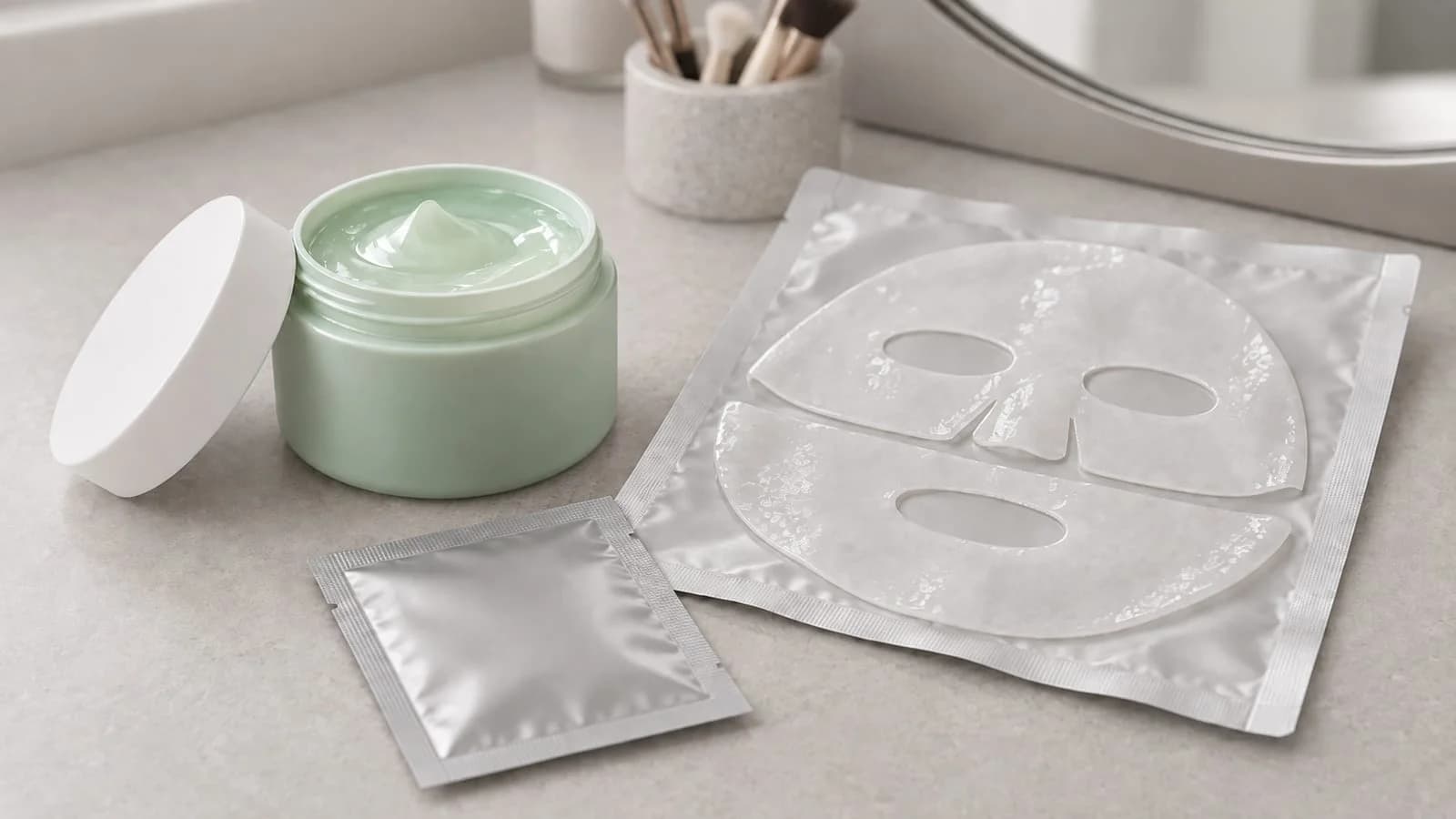
A leave-on gel in a jar. A two-piece hydrogel you peel off your face like a costume mask. A gel you smooth on and wrapping off in the morning. All three get called a “sleeping mask.” Only one of the words in that name is doing any real work.
So we checked what each format actually is, what it costs, and whether the step earns its place over a plain moisturizer.
Key takeaways
- “Sleeping mask” covers at least three different formats: a leave-on gel-cream (Laneige, Mary & May, innisfree), a two-piece hydrogel sheet (Biodance), and a peel-off gel (Medicube). They are not interchangeable, and reviewers rarely say so.
- Cost per gram or millilitre ranges from 14.0 cents (Biodance) to 47.1 cents (Laneige), a more than threefold spread across five picks.
- One of the five, Mary & May’s Calendula Peptide mask, lists Denatured Alcohol as its second ingredient and includes Fragrance, despite marketing itself as gentle and EWG-verified.
- Independent sources describe sleeping masks as a two-to-three-times-a-week treatment layered over, not instead of, a normal moisturizer, not a nightly replacement for one.
- We already reviewed the best-known single product in this category in depth, the Laneige Water Sleeping Mask. This piece covers where it sits next to four others, not a repeat of that analysis.
The 5 best Korean sleeping masks at a glance
- Most recognized: Laneige Water Sleeping Mask (around $33)
- Best hydrogel format: Biodance Bio-Collagen Real Deep Mask (around $19)
- Best peel-off format: Medicube Collagen Night Wrapping Mask (around $20.90)
- Best for peptides, with a caveat: Mary & May Calendula Peptide Ageless Sleeping Mask (around $10.99)
- Best budget pick: innisfree Green Tea Hydrating Sleeping Mask (around $14.96)
What is a Korean sleeping mask, actually?
Not one thing. The five best-known products sold as sleeping masks in the US split into three different formats, and a shopper comparing them by price alone is comparing different jobs.
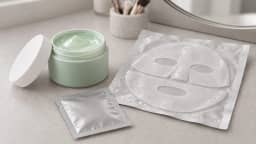
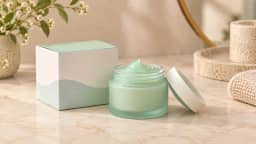
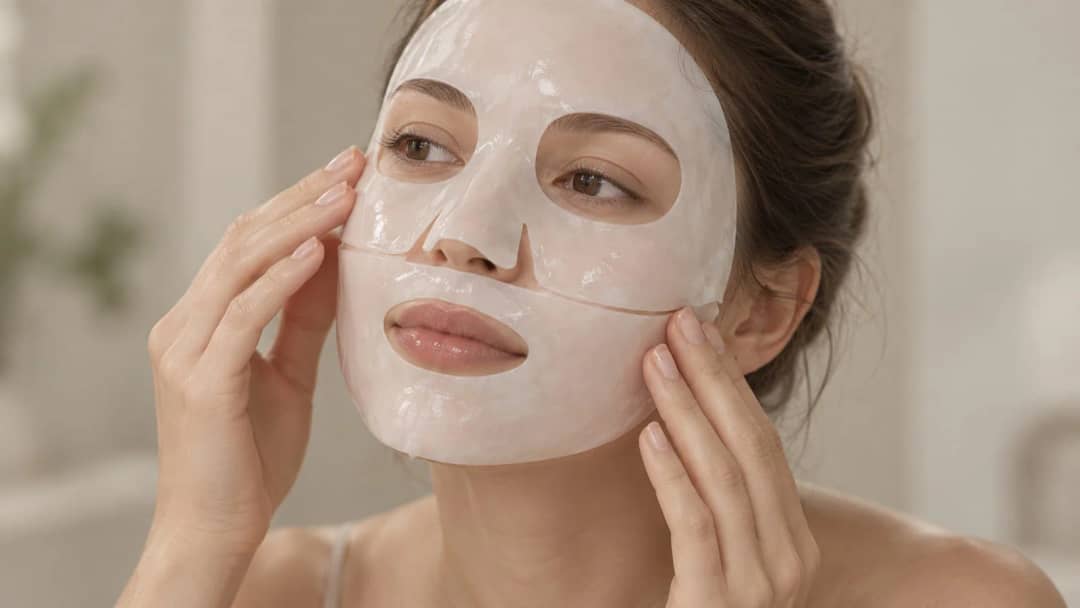
A leave-on gel-cream, the format Laneige, Mary & May and innisfree all use, is applied like a rich moisturizer and left on the skin overnight. A two-piece hydrogel, Biodance’s format, is a solidified essence sheet, not fabric, applied to clean skin and left on for two to eight hours before the remaining essence is patted in, not rinsed off. A peel-off gel, Medicube’s format, goes on wet and is gently peeled away the next morning rather than washed off.
Dermatologist Dr. Danny Guo describes the shared mechanism behind formats like these: some formulas “provide a seal to keep actives in the skin longer,” an occlusive effect that also slows water loss overnight. What differs between the three formats is how that layer is delivered and removed, not whether the mechanism works.
Is “occlusive” always the same thing?
No. A dermatology review in the National Library of Medicine’s PMC archive found that petrolatum, even at a concentration as low as 5%, reduces transepidermal water loss by more than 98%, well ahead of lanolin, mineral oil or silicones, which manage only 20 to 30%. Even the strongest occlusive on record still lets a small amount of water through; nothing tested creates a fully sealed layer.
None of the five formulas here were tested against that specific benchmark, so treat “occlusive” as a real, evidence-backed mechanism, not proof that any one of these five matches petrolatum’s own measured effect. The label word alone does not tell you how strong a specific formula’s occlusion actually is.
None of the five relies on petrolatum itself. Instead they use film-forming polymers, algae-derived gelling agents and hydrocolloid-type ingredients to build the occlusive layer, a different chemistry with its own water-escape profile that has not been studied against the petrolatum benchmark in the same way.
How did we choose these?
We do not test products on skin. This piece is built from published ingredient lists, prices collected from each brand’s own US store or, where a brand does not sell direct, a major authorized US retailer, and a search of independent reviews.
We picked five products that represent each format and a range of prices, rather than ranking every sleeping mask sold in the US. One, the Laneige Water Sleeping Mask, already has its own dedicated review on this site; it appears here only as the format’s most recognized example, not a repeat of that analysis.
A sixth candidate, Skinfood’s Black Sugar Mask, came up in early research as a possible pick. It is a wash-off exfoliating scrub meant to be rinsed after ten to fifteen minutes, not an overnight product, so it was dropped rather than forced into a category it does not belong to.
Our How We Review page covers this methodology in full.
What do Korean sleeping masks cost?
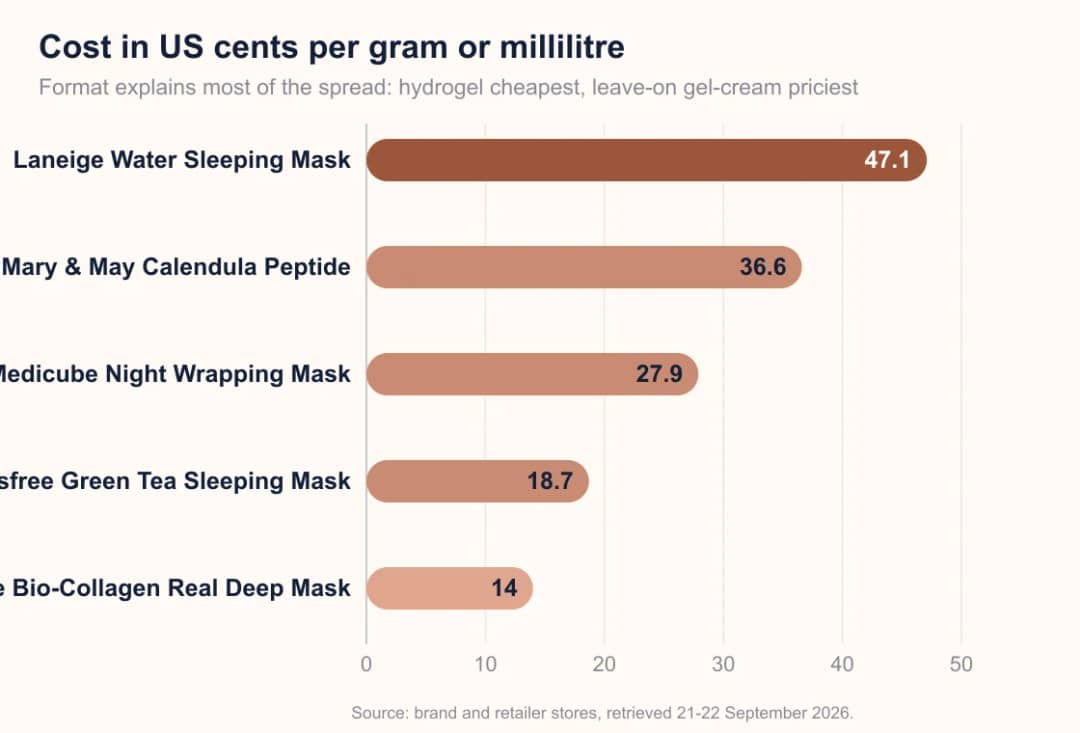
Nothing close to a single price point. Per gram or millilitre, the five we checked run from 14.0 cents to 47.1 cents, a more than threefold spread that tracks format as much as brand.
Four of the five prices were collected the same day, from each brand’s own store where one exists and a major authorized US retailer where it does not. The fifth, innisfree’s, was re-verified a day later through a smaller reseller after its usual retailer delisted it.
| Product | Best for | Price | Cost per gram or ml |
|---|---|---|---|
| Laneige Water Sleeping Mask | Most recognized | $33 / 70ml | 47.1 cents |
| Mary & May Calendula Peptide Ageless Sleeping Mask | High peptide count, with a caveat | $10.99 / 30ml | 36.6 cents |
| Medicube Collagen Night Wrapping Mask | Peel-off format | $20.90 / 75ml | 27.9 cents |
| innisfree Green Tea Hydrating Sleeping Mask | Budget pick | $14.96 / 80ml | 18.7 cents |
| Biodance Bio-Collagen Real Deep Mask | Hydrogel format | $19 / 4 masks (34g each) | 14.0 cents |
Is unit price the right way to compare these?
Not on its own. The hydrogel format comes out cheapest per gram here, partly because a jar of gel-cream is designed to last months of nightly use while a hydrogel pack is priced per occasional-use mask. Comparing the two formats purely by unit cost undersells how differently people actually use them.
A more useful comparison splits by how the product is actually consumed: a 70ml jar used two to three times weekly can last several months, while a four-mask hydrogel pack is gone after four uses regardless of price per gram. The real monthly cost depends on frequency as much as unit price.
Put in cost per application rather than per gram, Laneige’s jar works out to roughly 47 to 94 cents a use at a typical one-to-two-gram application, while a single Biodance mask is a flat 4.75 dollars regardless of how thin or thick a layer that particular night calls for.
1Laneige Water Sleeping Mask: Most Recognized
The leave-on gel-cream format’s best-known example, and the only one of these five we have reviewed in full elsewhere. At $33 for 70ml, 47.1 cents per millilitre, it is also the most expensive per unit here.
We already checked its ingredient list against its own marketing claims, its real cost per millilitre against two other US retailers, and what independent reviewers actually say about the fragrance and texture. That full review covers all of that; this entry exists only to place it against the other formats.
Of the three formats covered here, this is the one most people mean by default when they search “Korean sleeping mask” without naming a brand, which is part of why it anchors this comparison rather than sitting alongside the other four as an equal.
Best for: anyone who wants the most recognized, easiest-to-find name in the category, and a nightly-adjacent leave-on ritual over a jar. Price: around $33 for 70ml.
2Biodance Bio-Collagen Real Deep Mask: Best Hydrogel Format
A two-piece hydrogel, not fabric, sold as a pack of four 34-gram masks for $19, 14.0 cents per gram, the cheapest unit price of the five. Its ingredient list leads with Water, Glycerin and an acrylates copolymer, followed by niacinamide, several algae-derived gelling agents and a probiotic ferment filtrate.
The brand’s own usage guidance and independent reviewers describe the same routine: apply to clean, damp skin, leave on two to eight hours, and pat in whatever essence remains rather than rinsing. That ritual differs from a jar of gel-cream, so the price should be read per occasional mask, not stretched into a per-night comparison.
This is also the single best-selling facemask on Amazon US, independent sales-tracking data shows, ahead of every competitor in the category. That is a mainstream-scale pick, not a niche one, despite the unusual two-piece format.
Best for: an occasional deeper-hydration treatment, dehydrated skin, or event-prep before a big day rather than nightly use. Price: $19 for a pack of 4 masks.
3Medicube Collagen Night Wrapping Mask: Best Peel-Off Format
The one true peel-off format among the five, priced at $20.90 for 75ml at Ulta Beauty, 27.9 cents per millilitre. The ingredient list opens with Water, Polyvinyl Alcohol and Glycerin, the polyvinyl alcohol being the film-forming ingredient that lets the dried layer peel away intact without a rinse.
Niacinamide, sodium hyaluronate and Ceramide NP appear further down the list, supporting hydration rather than acting as the defining ingredient. The peel-off mechanic, not the active list, is the real differentiator from the other gel-based picks: peeling away an intact film the next morning is a different physical action from wiping off a gel-cream or patting in leftover hydrogel.
This design also matters practically: it is built for hours-long overnight wear, unlike a rinse-off clay or exfoliating mask meant to come off after ten to fifteen minutes.
Best for: anyone who dislikes a sticky or tacky residue overnight and wants a clean peel-off finish by morning. Price: $20.90 for 75ml at Ulta Beauty.
4Mary & May Calendula Peptide Ageless Sleeping Mask: Best for Peptides, With a Caveat
A leave-on gel-cream priced at $10.99 for 30ml at Target, 36.6 cents per gram, built around an unusually large peptide roster: 25 distinct peptide ingredients appear on its 56-item list, more than either other pick discloses.
The full ingredient list opens with Purified Water, then Denatured Alcohol as the second ingredient, and includes Fragrance near the end. That sits uneasily next to the brand’s marketing, which describes the product as gentle and free of common irritants. Anyone choosing it for the peptide count should know the alcohol and fragrance are there too, just not headlined.
The 25 peptides span several families, including copper peptides and palmitoyl-linked chains, both commonly used for firmness and fine-line support elsewhere. A large peptide count is not automatically better than a smaller one, but this is a dense formula by the standards of the other four picks.
Best for: peptide-focused routines, so long as you check the alcohol and fragrance against your own sensitivity first. Price: $10.99 for 30ml at Target.
5innisfree Green Tea Hydrating Sleeping Mask: Best Budget Pick
The simplest ingredient list of the five at 18 items, priced at $14.96 for 80ml through Korean Direct, 18.7 cents per millilitre. Reviewers consistently place it as the gentlest option here, recommended for dry and sensitive skin over a specific active ingredient.
It is not the cheapest per millilitre of the five, that is the hydrogel format, but it is the least expensive full-size leave-on gel-cream, the more useful comparison for anyone choosing between jars rather than formats.
Its short ingredient list also makes it the easiest of the five to patch-test quickly, since fewer individual ingredients could be behind a reaction if one shows up.
innisfree’s own Jeju-sourced green tea line spans toners, serums and this sleeping mask, all built around the same extract at different concentrations, which is why this reads as the gentlest of the five.
Best for: dry and sensitive skin on a budget, and anyone patch-testing the category for the first time. Price: $14.96 for 80ml at Korean Direct.
Do you actually need a separate sleeping mask?
Usually only if your moisturizer alone is not doing the sealing job you want it to. Independent sources are consistent that a sleeping mask is meant to sit over a normal routine, not replace the leave-on moisturizer in it, the same relationship we found when we reviewed the Laneige pick specifically.
For most people, the honest answer is that a well-chosen moisturizer already does most of this job nightly. A sleeping mask earns its place for an occasional deeper treatment, not as a default addition to every routine, and our ranking of Korean moisturizers covers the step it is meant to sit on top of.
The same “is this step actually doing something different” question applies earlier in the same routine, where we found a real split between an essence and a serum worth checking before adding either.
How often should you actually use one?
Two to three times a week for most of these five, based on both the brands’ own instructions and independent reviewer consensus, not nightly. That frequency reflects a more concentrated, occasional-treatment role rather than a basic hydration step you would reach for every night.
The hydrogel and peel-off formats are priced and packaged around that occasional-use pattern. Treating any of the five as a nightly replacement for a moisturizer will burn through a jar or a pack of masks far faster than the brand’s own math assumes.
A useful rule of thumb: if a product’s own instructions say “two to three times a week” rather than “morning and night,” it is being marketed as a treatment layer, not a basic moisturizer, whatever the jar looks like on a shelf next to one.
For where this step actually sits against every other step, thinnest to thickest, our guide to the Korean skincare routine covers the full order rather than just this one layer of it.
Frequently asked questions
Is a Korean sleeping mask the same as a night cream?
Not quite. Both are leave-on overnight steps, but a sleeping mask is generally used two to three times a week as a more occasional, concentrated treatment, while a night cream or regular moisturizer is meant for nightly use. The two are not interchangeable in frequency even when the texture looks similar.
What is the difference between a hydrogel sleeping mask and a gel-cream one?
A hydrogel sleeping mask, like Biodance’s, is a solidified two-piece sheet applied over damp skin and left on for a few hours before the remainder is patted in. A gel-cream sleeping mask, like Laneige’s or innisfree’s, is applied by hand from a jar and left on all night, closer in ritual to a regular moisturizer.
Does the Mary & May Calendula Peptide mask contain alcohol?
Yes. Denatured Alcohol is the second ingredient on its label, and the product also lists Fragrance. Both are present despite the brand’s own marketing describing the product as gentle, so anyone sensitive to either should check the full list before buying.
Which Korean sleeping mask is cheapest per use?
By unit price, Biodance’s hydrogel mask is cheapest at 14.0 cents per gram, but it is sold and used as an occasional two-piece mask rather than a nightly product. Among the full-size gel-cream jars meant for regular use, innisfree’s Green Tea Hydrating Sleeping Mask is the least expensive at 18.7 cents per millilitre.
Can a sleeping mask replace my moisturizer?
Not as a nightly swap. Sleeping masks are generally meant to layer over a normal moisturizer a few times a week, not replace the nightly step, the same point covered in more depth earlier in this piece.
The bottom line
“Sleeping mask” is doing less descriptive work than it seems to. Three different application formats, a more than threefold price spread per unit, and at least one product whose ingredient list quietly contradicts its own gentle marketing, all sold under one shared name.
The format matters more than the brand name when deciding which of these five actually fits a routine: a jar for nightly-adjacent use, a hydrogel pack for an occasional deeper treatment, or a peel-off gel for something in between.
None of these five is a replacement for a normal moisturizer, and the ones marketed as gentlest are worth a label check rather than a marketing-copy read, the same lesson Mary & May’s own ingredient list makes plainly.
Browse everything in moisturizers.
Sources
- Biodance, official store, “Bio-Collagen Real Deep Mask” product page, price and ingredient list, retrieved 21 September 2026, biodance.com
- Target, “Mary & May Calendula Peptide Ageless Sleeping Mask, 1.05 oz” listing price, retrieved 21 September 2026, target.com
- INKEEDecoder, “Mary & May Calendula Peptide Ageless Sleeping Mask ingredients”, full ingredient list, retrieved 21 September 2026, inkeedecoder.com
- Ulta Beauty, “medicube Collagen Night Wrapping Mask” listing price, retrieved 21 September 2026, ulta.com
- Korean Direct, “innisfree Green Tea Sleeping Mask 80ml” listing price, retrieved 22 September 2026, koreandirect.com
- Laneige, official US store, “Water Sleeping Mask” product page, price previously verified 20 September 2026, us.laneige.com
- National Library of Medicine, PMC, “Moisturizers: The Slippery Road”, petrolatum transepidermal-water-loss data, retrieved 22 September 2026, pmc.ncbi.nlm.nih.gov
- INKEEDecoder, “innisfree Green Tea Sleeping Mask ingredients”, full ingredient list, retrieved 22 September 2026, inkeedecoder.com
- Parade, “9 Best Overnight Face Masks for Effortlessly Glowy Morning Skin, According to Dermatologists”, retrieved 21 September 2026, parade.com
- ASInsight, “Best Selling Facemask 2026”, Amazon US sales-ranking data, retrieved 21 September 2026, asinsight.com